Why You Need a Mold Inspection
Buying a home is one of the largest investments most people will ever make. While buyers often focus on location, layout, and cosmetic condition, one critical area is frequently misunderstood or overlooked: mold and moisture intrusion.
One of the most common questions we receive is:
“Do I really need a mold inspection? Won’t mold testing tell me everything I need to know?”
Based on more than 20 years of experience and tens of thousands of inspections across multiple states, we’ve found that a proper mold investigation is made up of two equally important parts:
Mold Inspection (approximately 75% of the puzzle)
Mold Sampling & Testing (approximately 25% of the puzzle)
Both are important—but neither can tell the full story on its own. Mold inspections and mold testing must be performed together to properly evaluate a home.
Below we'll explain why that is, what buyers risk by skipping an inspection, and how a mold inspection protects both your health and your financial investment.
Mold Inspection vs. Mold Testing: What’s the Difference?
Before diving into real-world examples, it’s important to understand the distinction.
What a Mold Inspection Includes
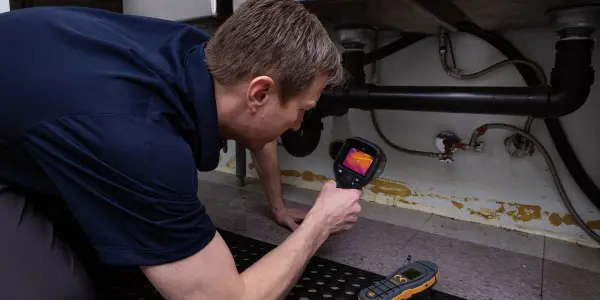
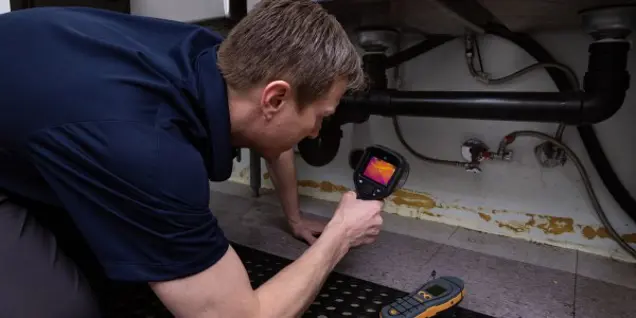
A mold inspection is primarily a moisture intrusion investigation. It focuses on identifying conditions that allow mold to grow—even if mold is not yet visible or airborne.
A professional mold inspection typically includes:
Visual assessment of the property
Moisture meter readings in high-risk areas
Evaluation of plumbing fixtures, bathrooms, kitchens, and laundry areas
Identification of staining, swelling, or building material deterioration
Determining where and what type of testing (if any) is appropriate
What Mold Testing Does
Mold testing (air, surface, or cavity sampling) is used to:
Confirm the presence, concentration and type of mold
Establish baseline indoor air quality
Verify successful remediation after cleanup
The key takeaway for homeowners, buyers and sellers is that mold testing answers what is present. Mold inspection answers why it’s there and where it’s hiding.
Case Study #2: No Mold — Still Thousands in Repairs
The Scenario
Mrs. Black was also purchasing a home and chose to skip the mold inspection in favor of representative air sampling in the master bedroom, living room, and kitchen. All air samples were within normal ranges.
What Happened Next
Just one week after moving in, Mrs. Black noticed the kitchen hardwood flooring buckling. A follow-up inspection revealed an active leak under the dishwasher that had saturated the flooring. While no mold growth was present, nearly half of the kitchen flooring had to be replaced—costing thousands of dollars.
It's important to understand that mold inspections are not just about finding mold. Water intrusion alone can cause extensive and expensive damage, even when mold is not present.
Had a moisture inspection been performed prior to closing, the leak would have been identified and addressed by the seller.
One of the most common questions our offices receive is "Why do I need a mold inspection? Won't mold sampling and testing tell me what I need?" From our experiences over the last 10 years, which includes tens of thousands of mold inspection projects across five states, we consider the mold inspection to account for about 75% of the puzzle and mold sampling and testing to account for the other 25%.
Both parts are important, but they must be done in tandem -- you can't just count on one to tell the entire story.
Rather than write abstractly about why you need both an inspection and testing, I thought it would be more useful to provide a number of examples to make my case. This posting will be the first of several hypothetical case studies I'll present.
Our client, Mr. Brown, is in contract to purchase a new home. He wants to make sure that he has no water intrusion or mold problems that could cost him money to repair or that would cause his family health problems. But, Mr. Brown is concerned about the cost of the inspection and the testing. He believes his home inspector will do a thorough inspection, so he just wants mold testing in a few rooms and wants to skip the mold inspection. We warn him against this decision and try to explain the need for the mold inspection, but he won't be swayed.
He asks us to collect air samples in a few rooms in the home; including the master bathroom and master bedroom. All of the air samples come back from the lab as "normal". Mr. Brown purchases the home and believes everything is ok from a water and mold standpoint. About a month after moving in, he notices a really musty odor in his master bedroom and is seeing some swelling of the drywall adjacent to the master bathroom shower. He hires a plumber to investigate. The plumber opens up the access panel to the shower plumbing and finds the inside of the wall full of mold. Mr. Brown is upset because he had mold testing performed in both the bedroom and bathroom and the air samples were normal. How could this happen?
A proper mold investigation requires both a mold inspection and mold testing. Had Mr. Brown paid for the mold inspection, the inspector would have used their moisture meter around all plumbing areas and places where water and mold are often found -- like the areas adjacent to the shower. The inspector would have found elevated moisture and would have observed the staining and swelling of the drywall. The inspector would have recommended a wall cavity sample or invasive testing or both. The mold inspection service would have uncovered the mold problem.
Now, Mr. Brown is faced with a very expensive mold remediation project and repair of the drywall and shower. Since he has already purchased the home, he will likely have to pay for it himself. Had he spent just a little more money for the mold inspection during his due diligence, the responsibility to repair the shower and pay for the mold remediation would have been the seller's.
That said, Mr. Brown did pay for mold testing of the air in the master bathroom and bedroom. How were those samples "normal"? The mold growth had an active source of water and food. Thus, it was not actively sporulating. And, it was trapped inside a wall cavity. Under these conditions, it is perfectly normal to have an air sample with no elevated spore counts in the air even though there is active mold growth in the area.
Again, this is why you need both a mold inspection -- a big part of which is a moisture intrusion investigation -- and mold testing.
Check Out What a Mold Inspection Report Should Look Like
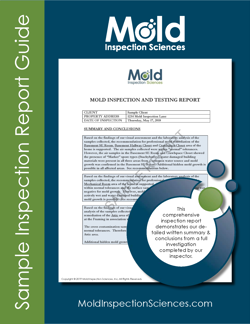
- Tips & Recommendations to solve help solve issues found on your property
- Suggestions to avoid the possibility of continued or future issues
- An Expert Action Plan for mold and moisture in your home and office that may be responsible for your health problems